

Jul 1028
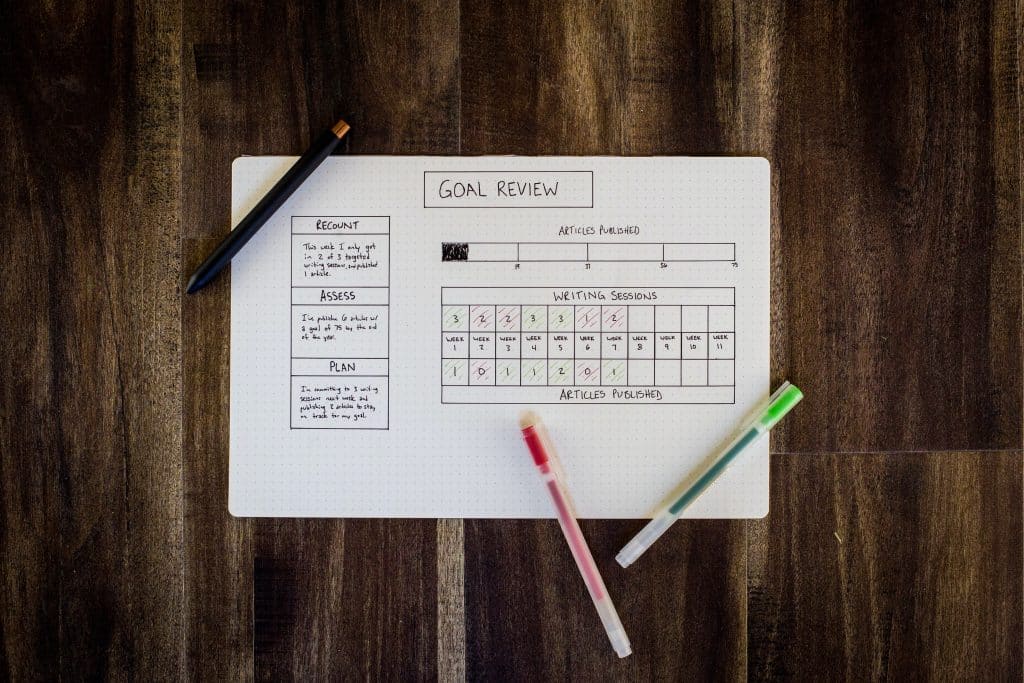
This week, I’m doing part two of a blog post I started last week on Blogging Best Practices. This post is inspired by a webinar that I conducted with my friend, blogger and activist Shaun Dakin, Director of Business Development at Infield Communications. Here are additional take-aways from the webinar.
- How Long Should Your Posts Be? We suggest that each post be no more than 4-6 paragraphs. If your posts are too long, your followers may decide to read them at a later time and not come back. But you want enough length to be able to cover a topic with enough substance.
- Create Visual Interest. Although followers follow blogs for their content, we believe that your posts will have more impact if they have photos, videos, event basic html formatting. If nothing else, use formatting to make your content skimmable.
- Align Posts With Your Keyword/SEO Strategy. While I’m a firm believer that you can’t force keywords into headlines, do try to make your titles and opening paragraphs keyword rich.
- Create Compelling Introductions. Think about it. You make a decision about whether or not to open an e-mail or click on an article in your RSS reader based on the title and opening paragraph. So make your blog post introductions compelling to encourage clicks.
Read the rest of this entry
Jul 1021
A couple of months ago, I had the pleasure of conducting a webinar on Blogging Best Practices with my friend, blogger and activist Shaun Dakin, Director of Business Development at Infield Communications. Shaun and I are passionate bloggers and we each had a lot to say about what we think it takes to be a good blogger and have a successful and well-read blog! Here are some of the take-aways from the webinar:
- What Are Your Goals? The most important thing is to align your blog’s goals with your organization’s goals. Are you trying to engage your target audiences? Influence? Foster specific actions? Your goals should be measurable so that, at the end of the day, you know if your blog is a success.
- Who Should Blog? Shaun and I believe that anyone can blog, but for most organizations, you need people who have a 20,000 foot view of the industry or issues, enjoys writing (or is paired with someone who enjoys writing and is a good writer to boot), and is committed to pumping out content on a regular basis.
- What Should You Blog About? This is the $64,000 question! Ultimately, you need a mission statement for your blog that guides your content strategy. We grouped blog posts into the categories. In practice, most blogs employ a variety of blog post types to keep readers engaged.
- Hot items/News – These posts tend to cover what’s new in the industry, breaking news, etc.
- Strategy/Commentary – These posts try to provide a perspective on specific issues and usually aim to persuade readers to take a certain point of view.
- Trends - These posts report on market trends, trending topics, research and statistics.
- How-To Guides – These posts are often a combination of text and video and aim to provide users with a practical guide to doing something specific.
Read the rest of this entry
Jun 1004
I blogged last week about how excited I am that some of my favorite magazines are now available on the iPad. Last week, I discovered that TIME Magazine has a free iPad app. Turns out, the app is free, but issues are not. Each issue is $4.99. $4.99! When a print subscription is $20 through Amazon!
A recent article in Ad Age Daily tries to explain why we should expect to pay more for online subscriptions on the iPad. According to Ad Age, we should expect to pay $4.99 for an issue of TIME, Popular Science, Maxim, Popular Photography, Sound and Vision, Transworld Skateboarding and Islands because publishers are suffering, there are fewer tablet PC owners, and magazines are still burdened by their huge editorial costs.
But here’s the rub: I purchased an issue of TIME for $4.99 and discovered that the content was the same as my print issue! C’mon, TIME. I pay about $0.50 for a print issue, but you want me to pay $4.99 for the same thing! If you’re going to charge me a whole lot more, I expect a different experience and additional content I can’t get elsewhere.
This reminds me of publishers that put up PDF versions of their print publications and post them to the Web site. It’s easy to do and gets the job done. Problem is, the Web is a different medium from print. Have you ever tried to read a PDF of a print magazine? Try going from page 2 to page 36 on a Web browser. Try reading a two-column page that scrolls up and down past two screens on a monitor. And now companies are putting out software that will take print files and convert them to iPad apps! Once again, ignoring the usability and user experience capabilities of the device and merely re-purposing content. How does this create value?
Read the rest of this entry
May 1027
More and more of my clients are making the decision to eliminate their print magazines and newsletters. They’re choosing digital versions of their publications over print to eliminate printing and mailing costs, achieve immediate delivery, and occasionally, create personalized versions based on customer preferences.
All of this makes sense to me. I get most of my information via e-mail these days, and I’m subscribed to dozens of newsletters via e-mail and RSS. And in an effort to minimize the “piles” at home, I have canceled all but a few paper subscriptions.
But I got to thinking: Am I ready to ditch ALL of my paper subscriptions? Am I ready to cancel my print subscriptions to my favorite magazines, namely TIME, Smithsonian and Stanford magazines?
Here’s my concern about all digital publications: it’s easy to ignore an e-mail newsletter as just another e-mail in the hundreds I get every day. Consider this: when my copy of TIME magazine arrives on Saturday, it ends up in my “to read” pile. This pile gets shuffled around from dining room table to coffee table to bedroom side table. Each issue sticks around until I read or skim it, then toss. But here’s what happens with some of my e-mail subscriptions: if I have the time, I read them on the spot. If I don’t have the time, I may leave them in my inbox or move them to a “read” folder for later reading. Trouble is, with the flood of e-mail that I get, I rarely get to my e-mail read pile. And sometimes, in an attempt to gain back control of my inbox, I delete a huge group of e-mail newsletters and start over.
Ugh, so much for the future of publishing. What is the balance that content organizations should try to achieve between print and digital? And if digital is your only future, how do you ensure delivery and readership? I have some thoughts:
Read the rest of this entry
Dec 0904
Matrix Group worked with Accession Point to design and launch a blog for CEO Jill Stelfox. As a recognized consultant, Stelfox wanted a platform to share her blunt insight on how to help companies and CEO’s take their businesses to the next level.
Matrix Group work includes the following:
- Designed a blog that reflected Accession Point’s identity, as well as captured Stelfox’s personality
- Incorporated a content management system (CMS) to allow Stelfox to update her content on a frequent basis
- Assisted on content development, ensuring posts were effective and worked well on the Web
- Added a “share” function, allowing visitors to share Stelfox’s blog posts through social networking/bookmarking sites
Visit the Accession Point Blog
Nov 0910
There is an ongoing discussion at Matrix Group about content and Web design.
One camp says that clients need to have all of their content prepped and ready to go before design on a Web site even begins. The other camp says this view is not realistic, content is always behind, and clients often need the design to inspire them to update their content.
So which view is right? I actually think that both sides are right. But I think the question is misdirected. The real question is: how do we make content more important, earlier in the Web site design and development process?
Here’s something every Web design and development firm knows: Content is often the responsibility of the client, it’s often delayed, and it’s the most common reason for delayed launches. A List Apart has a whole section on their site devoted to content strategy. I love Bronwyn Jones’ article on how good design is not possible without good writing. And I think Erin Kissane is on to something when she discusses content templates (not design templates) as a way to help subject matter experts put their knowledge down on paper.
Here is what I have learned about content, the importance of content to design, and coaxing good content out of clients: Read the rest of this entry